How Social Media Shapes Modern Political Protests
When protesters flooded the streets of Hong Kong in 2019, they weren't just carrying signs — they were coordinating in real time through Telegram channels, documenting police encounters on Instagram, and broadcasting live to global audiences on Facebook. The protest infrastructure had fundamentally changed. Social media didn't just report on the movement; it was the movement's nervous system.
Understanding how platforms like Twitter/X, TikTok, and Telegram shape modern political protests means grappling with a genuine tension: these tools give ordinary people extraordinary reach, while simultaneously exposing them to surveillance, disinformation, and algorithmic distortion. Neither purely liberating nor purely dangerous, social media has become the defining variable in how dissent organizes, spreads, and survives.
The New Town Square: Social Media as a Protest Infrastructure
Social media platforms have replaced traditional organizing channels — union halls, church networks, printed pamphlets — as the primary coordination layer for protest movements. What once took weeks of logistical groundwork can now happen in hours through a shared group chat or a pinned post.
The shift is structural, not just technological. Platforms like Facebook and Telegram offer features that map almost perfectly onto protest logistics: event creation, encrypted group messaging, live broadcasting, and cross-border reach. During the Arab Spring, Egyptian activists used Facebook groups to coordinate the January 25, 2011 demonstration in Tahrir Square, turning a digital call-to-action into a physical mass gathering that helped topple a government.
But calling social media a "protest tool" undersells its role. It's closer to protest infrastructure — the roads, communication lines, and meeting spaces that movements depend on. The difference matters because infrastructure can be seized. When a government pressures a platform to remove content or hands over user data, the entire organizing layer becomes vulnerable at once.
Speed and Scale: How Viral Mobilization Changes the Game
Hashtag activism and algorithmic amplification allow protests to grow faster and reach further than any pre-digital movement could. A single video can shift public opinion within 24 hours; a hashtag can coordinate action across dozens of cities simultaneously.
The Black Lives Matter movement illustrates this dynamic precisely. After George Floyd's death in May 2020, the hashtag #BlackLivesMatter was tweeted 47 million times in a single week, according to Pew Research Center data. Protests erupted in all 50 U.S. states and in cities across Europe, Australia, and Latin America — a geographic spread that would have been logistically impossible to achieve through traditional organizing in that timeframe.
Viral mobilization works through a compounding mechanism. A post gets shared, reaches new networks, triggers emotional responses, generates more shares, and eventually crosses the threshold where algorithmic amplification kicks in — platforms begin surfacing the content to users who didn't follow the original account. At that point, the movement's reach is no longer limited by its existing supporter base.
The trade-off is fragility. Movements that scale rapidly through virality can also collapse rapidly when the news cycle moves on, leaving organizers with large but loosely committed audiences.
Citizen Journalism and the Power of Real-Time Documentation
Citizen journalism — ordinary people recording and sharing events as they happen — has fundamentally altered the accountability dynamics of political protests. Protesters can now bypass mainstream media gatekeeping entirely and publish directly to global audiences.
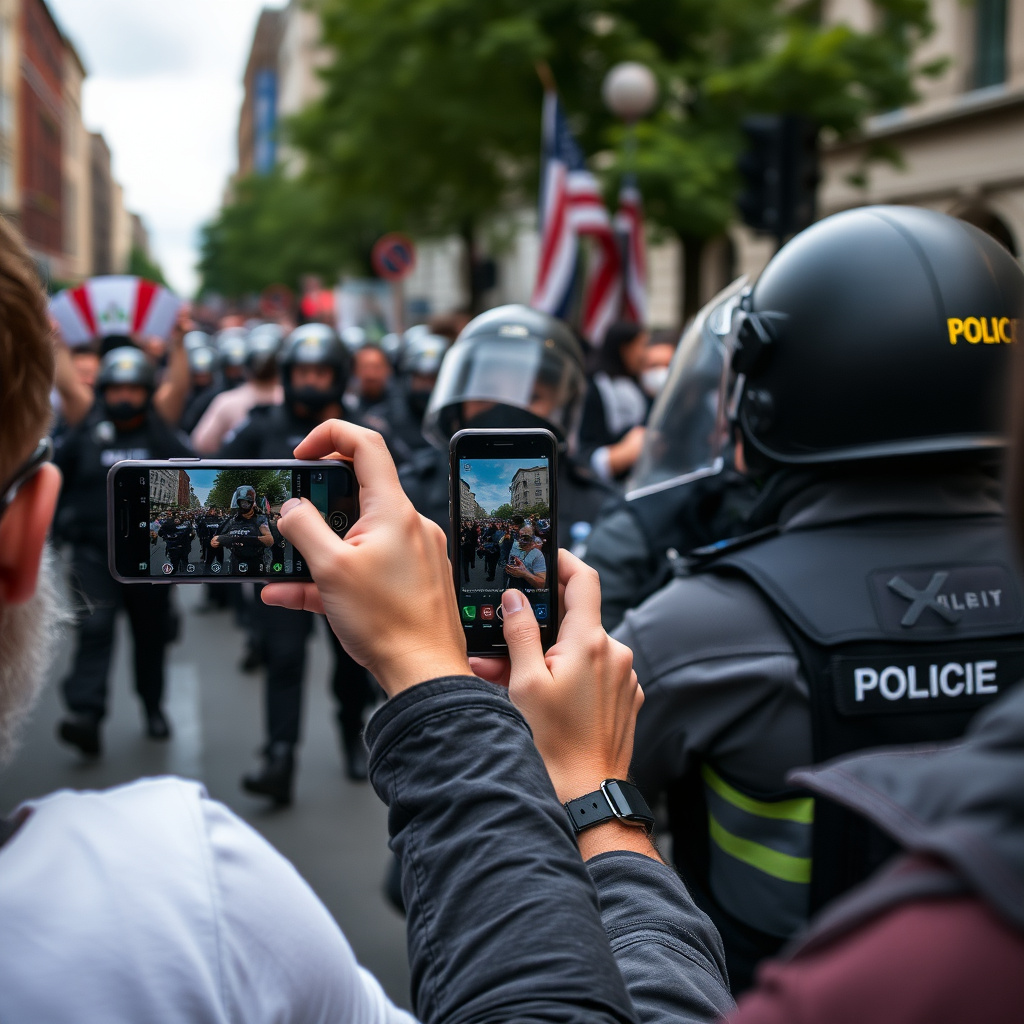
The practical impact is significant. Before smartphones and social platforms, authorities could control the narrative of a protest by managing press access. Now, dozens of people in any crowd are recording simultaneously. When footage of a specific incident goes viral on Twitter/X or TikTok, it creates a public record that's difficult to suppress and impossible to un-see.
This dynamic played out repeatedly during the Hong Kong protests, where demonstrators developed sophisticated documentation practices — filming each other's arrests, archiving footage across multiple platforms, and using encrypted apps to share evidence with journalists and human rights organizations. The result was a granular, real-time record of events that shaped international coverage and diplomatic responses.
The limitation worth acknowledging: raw footage without context can mislead as easily as it can inform. A clip showing one moment of a longer confrontation can be shared selectively to support competing narratives — which is where citizen journalism intersects uncomfortably with disinformation.
The Double-Edged Algorithm: Amplification and Distortion
Platform algorithms can both supercharge a protest movement's visibility and spread misinformation that distorts its narrative or incites violence. The same mechanism that makes a movement go global can make a false rumor go viral just as fast.
Algorithms on Facebook, TikTok, and YouTube are optimized for engagement — and outrage, fear, and conflict generate more engagement than nuanced reporting. This creates a structural bias toward inflammatory content. During the 2020 U.S. protests, Facebook's own internal research (later revealed in the Frances Haugen disclosures) showed that the platform's algorithm was amplifying divisive content even when moderators flagged it.
For protest movements, this cuts both ways. Genuine documentation of police brutality can reach millions. But so can fabricated videos, misattributed footage, and coordinated disinformation campaigns designed to discredit organizers or provoke counter-protesters. Political polarization deepens when both sides of a conflict are consuming algorithmically curated feeds that confirm their existing beliefs and amplify the most extreme voices on the other side.
Movements that understand this dynamic tend to designate media teams, establish verification protocols for shared content, and actively counter false narratives — treating disinformation management as a core organizing function, not an afterthought.
Government Responses: Censorship, Surveillance, and Shutdowns
States counter social media-driven protests through three main mechanisms: content removal, digital surveillance, and internet shutdowns. Each represents a different point of intervention in the online-to-offline mobilization chain.
Content removal — pressuring platforms to take down posts, accounts, or hashtags — is the most common first response. It's also the least effective, since content spreads faster than it can be removed and deletion often generates more attention than the original post.
Internet shutdowns are blunter and more disruptive. According to Access Now's #KeepItOn campaign, governments imposed over 180 internet shutdowns globally in 2022 alone, many timed to coincide with protests or elections. Ethiopia, Iran, and Myanmar have all used shutdowns to disrupt protest coordination — with measurable effects on turnout and international coverage.
Surveillance is the most insidious tool. Governments can monitor public social media posts to identify organizers, track location data, and build profiles of protest participants. In authoritarian contexts, this exposure can mean arrest or worse. Even in democratic contexts, the knowledge of surveillance has a chilling effect on participation — people self-censor when they believe they're being watched.
From Clicks to Streets: The Gap Between Online Energy and Real-World Impact
Social media activism does not automatically translate into durable political change. The gap between online energy and real-world impact is one of the most important — and most debated — questions in contemporary political analysis.
The critique of "slacktivism" — the idea that liking, sharing, or signing online petitions substitutes for meaningful action — has real substance. Changing a profile picture or posting a hashtag requires almost no commitment, which means movements can accumulate large numbers of nominal supporters who won't show up when sustained effort is needed. The Arab Spring is instructive here: social media helped topple governments, but the structural political work required to build stable democratic institutions afterward was far harder to coordinate online, and several of those transitions failed.
That said, dismissing online activism entirely misreads how digital organizing actually functions. Social media is most effective as a mobilization layer — it lowers the barrier to initial participation, builds awareness, and creates the conditions for offline action. The movements that convert online energy into policy change tend to combine digital reach with traditional organizing: sustained street presence, coalition building, legal strategies, and electoral engagement.
The honest assessment is that social media is a powerful accelerant, not a substitute for political infrastructure. Movements that treat it as the latter tend to burn bright and fade fast.
The Future of Digital Dissent: Trends Shaping the Next Wave of Protests
Three emerging factors are reshaping how protest movements will organize in the coming years: encrypted messaging apps, decentralized platforms, and AI-generated content.
Encrypted apps like Signal and Telegram have already become primary coordination tools for movements operating under surveillance pressure. They offer a degree of operational security that public platforms can't provide — but they also fragment movements into closed channels that are harder to scale and easier for bad actors to infiltrate.
Decentralized platforms built on blockchain infrastructure promise to remove the single point of failure that makes traditional platforms vulnerable to government pressure. If no central company controls the platform, there's no entity to pressure into shutting it down. The practical adoption of these platforms by protest movements remains limited, but the trajectory is clear.
AI-generated content introduces the most unpredictable variable. Synthetic video, audio deepfakes, and automated disinformation campaigns will make it significantly harder to verify what's real during fast-moving protest situations. Movements will need verification infrastructure that can operate at the speed of social media — a challenge that no current organization has fully solved.
The underlying dynamic won't change: states and movements will continue adapting to each other's tools, and the platforms caught between them will keep making consequential decisions about what speech survives and what gets removed. The terrain shifts; the contest doesn't.
Frequently Asked Questions
Does social media make protests more effective?
Social media makes protests faster to organize and wider in reach, but effectiveness depends on whether online momentum converts into sustained offline action. Movements that combine digital mobilization with traditional organizing — coalitions, legal strategies, electoral engagement — tend to achieve more durable outcomes than those that rely on viral energy alone.
How do governments shut down social media during protests?
Governments use several methods: ordering internet service providers to block specific platforms, imposing full internet shutdowns, pressuring companies to remove content, and using surveillance tools to monitor and identify organizers. Full shutdowns are the most disruptive but also the most economically costly, which limits their use to high-stakes situations.
What role did social media play in the Arab Spring?
Social media — particularly Facebook and Twitter — accelerated coordination and helped broadcast protest footage to international audiences, increasing diplomatic pressure on governments. However, structural political factors (economic grievances, authoritarian governance, military decisions) drove the uprisings. Social media was a catalyst and amplifier, not the root cause.
Can social media protests lead to real policy change?
Yes, but rarely on their own. The Black Lives Matter movement's online mobilization contributed to concrete policy changes in several U.S. cities, including police reform legislation. The pattern in successful cases is consistent: viral attention opens a window, but organized political pressure keeps it open long enough for policy to change.
What is slacktivism and why does it matter for political movements?
Slacktivism refers to low-effort online actions — sharing posts, signing petitions, changing profile pictures — that create a sense of participation without requiring meaningful commitment. It matters because movements can mistake large online followings for genuine political power, then discover that most supporters won't sustain effort when momentum fades. The risk is that visible online activity substitutes for the harder, less visible work of building durable political organizations.